

πŸš€ Launch with Confidence – 6 Months of Free Post-Launch Maintenance. Explore More
+
πŸš€ Launch with Confidence – 6 Months of Free Post-Launch Maintenance. Explore More
+
πŸš€ Launch with Confidence – 6 Months of Free Post-Launch Maintenance. Explore More
+
πŸš€ Launch with Confidence – 6 Months of Free Post-Launch Maintenance. Explore More
+
πŸš€ Launch with Confidence – 6 Months of Free Post-Launch Maintenance. Explore More
+
πŸš€ Launch with Confidence – 6 Months of Free Post-Launch Maintenance. Explore More
Portfolio
Blogs
Contact Us
Easy understandable Quiz Playing Platform

Building a Location-Based Competitive Quiz Game

That Connects Real Players and Battles Them in Real Time

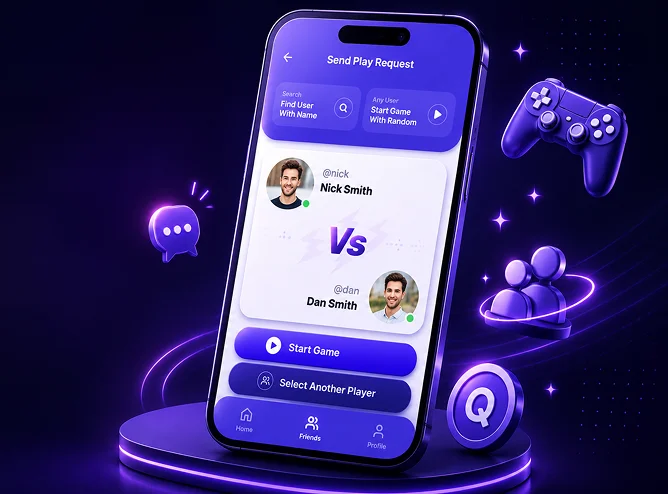
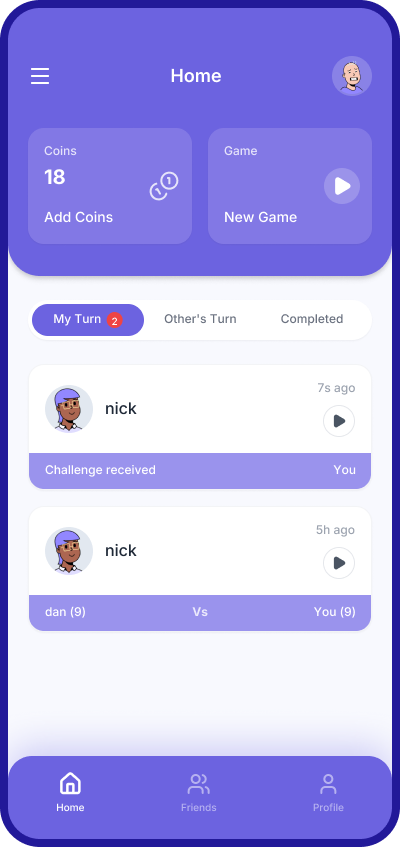
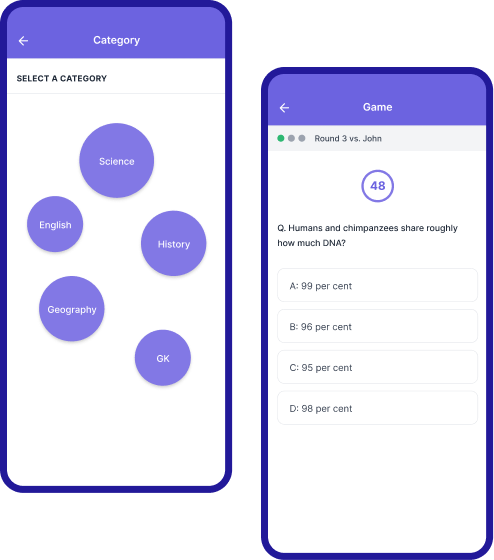
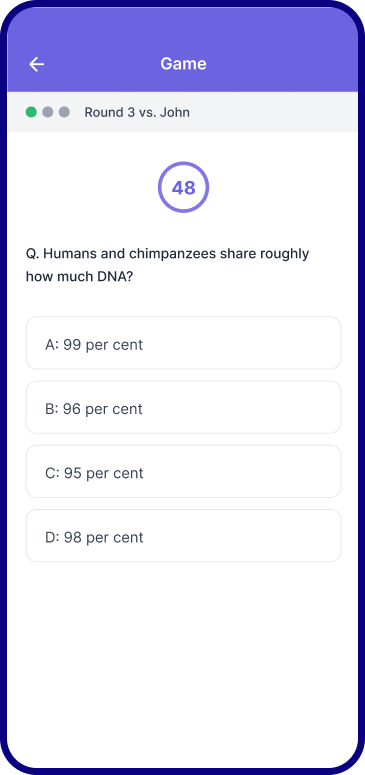
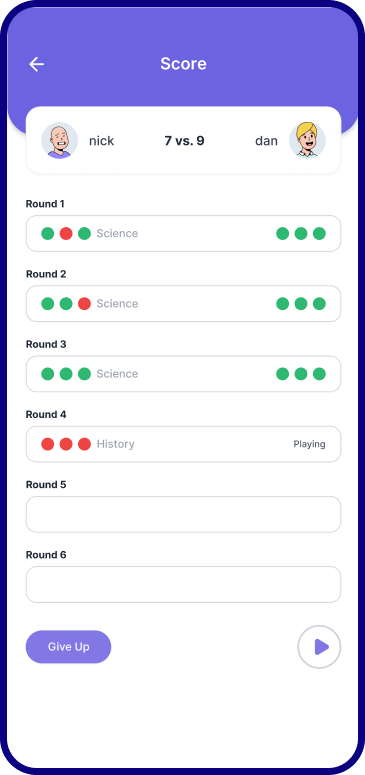
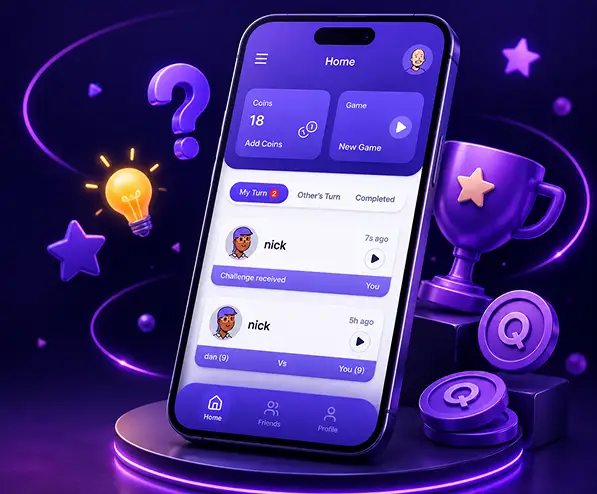
We partnered with Quizzire to turn a simple quiz concept into a live multiplayer game. The result was an iOS platform where players find real opponents on a nearby map, battle through synchronised rounds, chat mid-match, and earn balance rewards β€” with a web admin panel giving the team real-time visibility across the entire player network.

Quiz Game

Industry

Gaming & Interactive Entertainment
Quiz Game

Business Type

Global (Startup)
Quiz Game

Project duration

5 to 7 Months
Quiz Game
Premium Social Media Platform Premium Social Media Platform

About Client

The client had reviewed quiz platforms and trivia SDKs on the market. None supported location-based matchmaking, server-authoritative round synchronisation between two live players, in-game chat alongside an active match, and a dual play mode for both casual and scheduled competition. Their requirements meant a ground-up custom build β€” and that meant finding a team that had worked on real-time multiplayer systems, not just apps with a quiz screen bolted on.

GMTA Software was selected after a discovery session where our questions gave the client early confidence. We asked how the server would handle a round where one player disconnected before answering. We asked how the balance accounting would stay consistent if a match was abandoned after two rounds. We asked how player availability on the map would update the moment someone entered a match. Those questions showed the client we understood the product's operational reality, not just its feature list.

About Client Gmta

Why Did Quizzire Collaborate With GMTA Software?

CodocCall GMTA

The client had reviewed quiz platforms and trivia SDKs on the market. None supported location-based matchmaking, server-authoritative round synchronisation between two live players, in-game chat alongside an active match, and a dual play mode for both casual and scheduled competition. Their requirements meant a ground-up custom build β€” and that meant finding a team that had worked on real-time multiplayer systems, not just apps with a quiz screen bolted on.

GMTA Software was selected after a discovery session where our questions gave the client early confidence. We asked how the server would handle a round where one player disconnected before answering. We asked how the balance accounting would stay consistent if a match was abandoned after two rounds. We asked how player availability on the map would update the moment someone entered a match. Those questions showed the client we understood the product's operational reality, not just its feature list.

Challenges Addressed by GMTA Software

01 06

PLANNING TO BUILD A COMPETITIVE
GAME LIKE QUIZZIRE?

We help gaming startups build real-time competitive platforms with location-based matchmaking, server-authoritative game engines, in-game social features, and balance reward systems β€” across iOS, Android, and admin panels.

Transportation Operations 6 Months Free Maintenance After Launch
Premium Social Media Platform

Our Approach to Building the Blipearth Platform

A Server-Authoritative Game Engine

A Server-Authoritative Game Engine

The game engine ran entirely on the Node.js server, not the client devices. Questions were dispatched simultaneously to both players by the server. Answers were received, validated, and scored server-side. Round results were pushed back to both clients before the next question was released. This architecture meant neither player's device speed, network quality, or local clock could affect the fairness of the match. The server was the single source of truth for every event in every round.

01
Location Discovery:Built as a Game Lobby 02

Location Discovery:Built as a Game Lobby

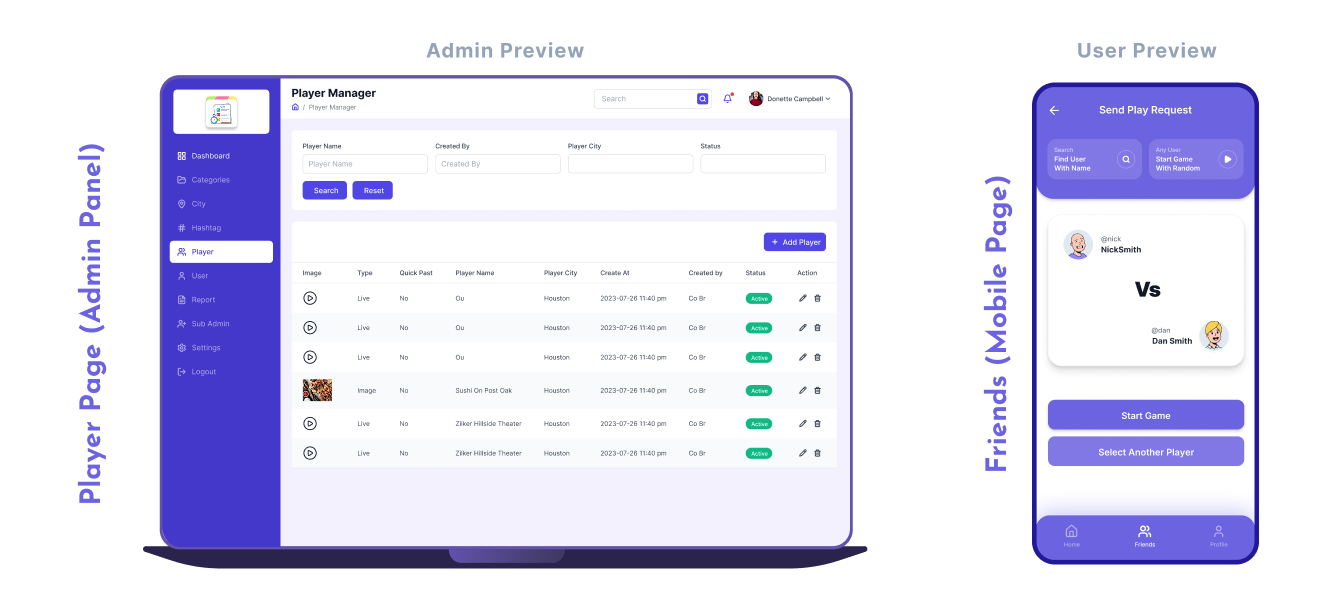
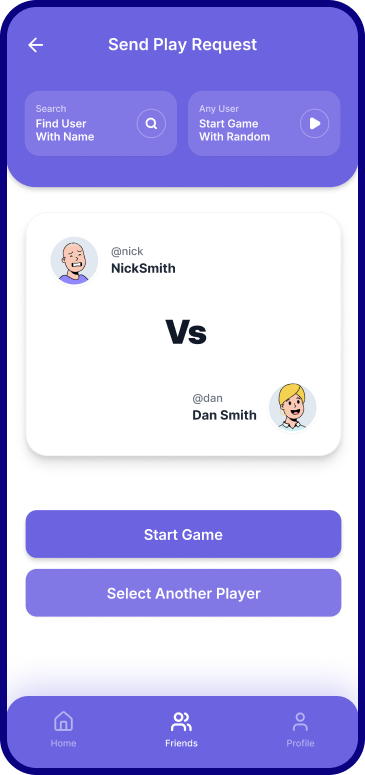
Player discovery was designed as the entry point into play, not as a utility screen before it. The live player map updated in real time via WebSocket β€” new players appearing as they came online, pins disappearing the moment a player entered a match. Each pin carried enough profile context for an informed challenge decision without leaving the map. The transition from finding an opponent to starting a match took three taps: tap a pin, review the profile, send a challenge.

Flexible Scheduling Above a Fixed Game Core 03

Flexible Scheduling Above a Fixed Game Core

Scheduled play was built as a layer above the game engine rather than inside it. The scheduler handled Firebase reminder notifications, lobby countdown state, and match cancellation logic for absent players. Once all players were present and the countdown completed, the scheduler handed a fully formed session to the engine, which ran it identically to a real-time match. The separation meant the game engine code was tested once and trusted for both mode.

Real-Time Admin Visibility Across the Network

Real-Time Admin Visibility Across the Network

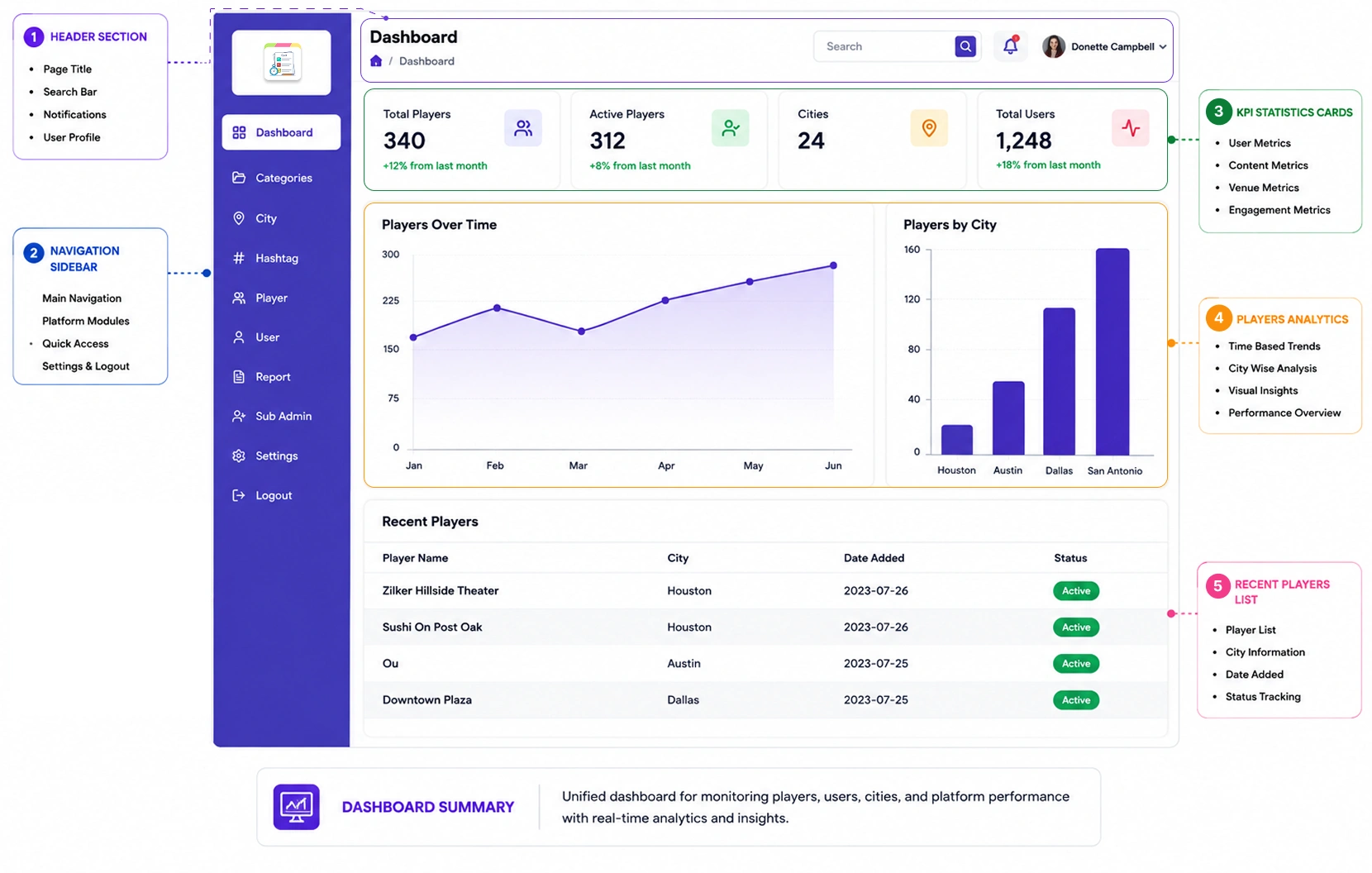
The admin panel subscribed to the same Node.js event stream that ran the game. Player location updates, match start and end events, and status changes fed the admin view in real time without polling. The live player map showed active players across the network with current match status. Admin actions β€” flagging an account, reviewing a balance dispute, ending an active session β€” were available from the player detail view and took immediate effect in the game state.

04
Premium Social Media Platform Blipearth

Process We Followed

01 Writing Code Writing Code
Game Architecture Before Writing

Understanding the Game Architecture Before Writing Code

Before any development began, we worked through the complete game flow with the client β€” every state the match could be in, every edge case in the balance system, every scenario involving disconnection or abandonment. This session produced a documented state machine for the game engine, balance rules covering all edge cases, and an API contract for both the iOS app and the admin panel. No assumptions were left to resolve during development.

  • Game state machine documentation for all match phases
  • Balance accounting rules for disconnection, abandonment, and ties
  • Location availability broadcast architecture
  • MongoDB and PostgreSQL schema design
02 Building the Backend, Game Engine, and Real-Time Layer Building the Backend, Game Engine, and Real-Time Layer
Building the Backend, Game Engine..

Building the Backend, Game Engine, and Real-Time Layer

The Laravel API, Node.js WebSocket server, and Firebase notification layer were developed concurrently. The game engine was built and tested in isolation against the documented state machine before integration with the iOS client. Dual-channel WebSocket multiplexing for game state and chat was validated with simulated concurrent sessions under variable latency before the iOS app consumed it.

  • Node.js WebSocket server with dual-channel game and chat multiplexing
  • Server-authoritative game engine with round and timer management
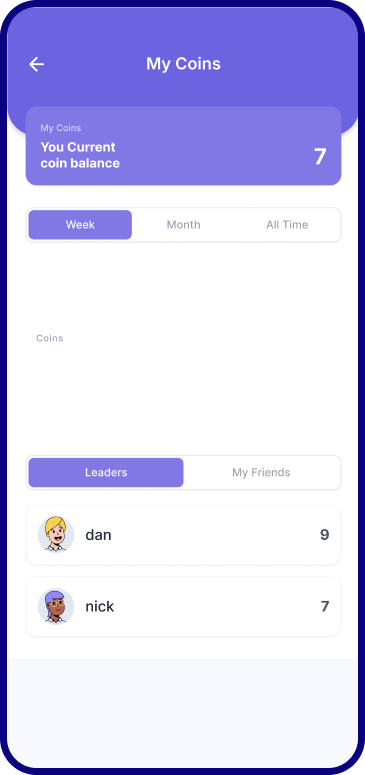
  • Atomic balance transaction system with full audit logging
  • Firebase push notifications for match requests and scheduled match reminders
03  iOS App, Admin Panel, and Launch  iOS App, Admin Panel, and Launch
iOS App, Admin Panel, and Launch

iOS App, Admin Panel, and Launch

The Swift iOS application was built against the validated backend with multiplayer stress testing conducted throughout β€” not only as a final QA step. Disconnection scenarios were tested at every match stage. The admin panel was integrated with the live event stream and tested against real player activity. A structured beta period preceded App Store public launch.

  • Swift iOS app with live map, game flow, balance dashboard, and chat overlay
  • Disconnection and reconnectiare on tested at every match stage
  • Admin panel integrated with live Node.js event stream
  • Beta period with controlled player group before App Store launch

Impact on Quizzire

Session Depth vs Solo Quiz Apps 2X

Session Depth vs Solo Quiz Apps

Players finding opponents nearby showed session durations roughly double those of single-player trivia apps in the same category.

Match Completion With Chat Higher

Match Completion With Chat

Matches where in-game chat was used had measurably higher completion rates β€” the social exchange kept players in through rounds where the score gap widened.

Audience from One Platform Dual

Audience from One Platform

Casual real-time players and institutional scheduled-event users both found a home in the same product, widening the audience without a second build.

LET'S BUILD THE NEXT
GAMING SUCCESS STORY

You have seen how Quizzire was built from a solo quiz concept into a live location-based multiplayer platform. Let us discuss how we can build a real-time game solution tailored to your competitive mechanic and target audience.

DISCOVERY PLATFORM
Gmta Location
Jaipur

Jaipur

C-305, 2nd Floor, Jan Path, Nirman Nagar, Jaipur, Rajasthan 302019

Bengaluru

Bengaluru

No. 4C-432, 2nd Floor, 2nd block, HRBR Layout, Kalyan Nagar, Bengaluru, Karnataka, India 560043

Singapore

Singapore

55 Serangoon North Avenue 4 (S9) #09-01 Singapore 555859

USA

USA

5214F Diamond Heights Blvd #3136 San Francisco, CA 94131 United States

Japan

Japan

1 Chome-2-9 Minato City Tokyo, Japan γ€’105-0021

Γ—
CallCall
Whatsapp Whatsapp
Email Email