

Key Takeaways:
- The global food delivery market is projected to reach around $505 billion by the end of 2030. This highlights the immense opportunity for businesses looking to invest in a food delivery app.
- Modern food delivery apps are integrating AI and Machine Learning technologies into their core functionality to enhance the user experience.
- The food delivery app development cost varies from $20,000 to $1,00,000, influenced by emerging technology and other factors.
- Top food delivery app features list that ensure product success are real-time tracking, multiple payment options, and AI-powered suggestions.
Businesses often struggle with how to build a successful food delivery app. The answer to this becomes even more obvious as we look ahead to 2026. Building a food delivery app is not only about delivering meals. It’s about offering convenience, quick service, and personalized experiences that make customers want to come back.
With rapidly advancing technologies, creating an app is crucial for streamlined operations and staying ahead in the competition. It’s not just about connecting customers, restaurants, and delivery partners—it is about how to leverage the tech to optimize the operational efficiency for long-term success.
Imagine how the food industry has evolved into a global powerhouse, with online food delivery alone expected to generate $505 billion (Source GVR) in revenue by 2030. That’s more than double the $288.84 billion forecasted in 2024, highlighting the explosive growth and success of the online food delivery ecosystem.
This growth can be attributed to several factors, including:-
- Users’ desire for a wide variety of food,
- Healthy meal choices, the convenience of ordering from home,
- Mobile phone penetration,
- Better logistics and easy digital payments.
The above reasons have transformed the global food delivery apps market.
Herein, food delivery app development offers a huge opportunity. Whether you want to build a custom app for your restaurant, enter the fast-growing grocery delivery market, or create a platform that competes with the best, you’re ready to launch something big and profitable.
This guide will take you through the complete process of food delivery app development, from choosing the right business model and designing key features to understanding the cost involved and overcoming the common challenges.
Types of Food Delivery App Development: The Business Model

Food delivery app development is a strategic move, but choosing the right business model is challenging. It requires balancing profitability and scalability. Different business models cater to different needs, even within the same industry. The right model will align with your business goals, allowing you to adapt to market evolutions.
Some apps are custom-built for specific business requirements, while others are off-the-shelf solutions. Each model comes with its own set of features, designed to fulfil unique business objectives. Aligning these different business models of food delivery apps will help you design a solution that creates an impact.
Aggregator model
The aggregator model has been a proven method to be highly effective in the food delivery industry, with benchmarking food delivery apps like DoorDash or Uber Eats leading the way. For founders looking to enter the market, this model offers a scalable and low-risk approach. It connects customers and restaurants through a centralized platform, allowing users to browse menus, place orders, and have them delivered, all through the same app.
The aggregator platform manages the entire process from order placement to delivery, without directly handling the food preparation.
Fully integrated model
A fully integrated food delivery app model works as a sole entity where the founder maintains full control over operations from kitchens to delivery. This helps in increasing profits and reducing complexity.
The company runs its own cloud kitchen management software and charges for direct delivery as per its costs. These types of apps are the best kitchen business models for people who manage a single-handed business or run a virtual kitchen.
Logistics handling platforms
A logistics handling app is quite different from those of aggregator food delivery apps. The model works as a third-party logistics partner where the food is prepared at a restaurant, and the delivery is done by these platforms.
This type of food delivery app is ideal for businesses aiming to offer a strong level of customer experience, making deliveries more reliable and quicker. The model generates revenue by:-
- Restaurant commission
- Delivery
- Other surge charges
Direct-To-Consumer (D2C) model
In the Direct-to-Consumer (D2C) model, food businesses build their own branded delivery apps. This approach helps them interact directly with customers and skip third-party platforms.
This model lets businesses keep more control over their brand, customer interactions, and data, so they don’t have to rely on aggregators.
Revenue is primarily generated through direct food sales and can be enhanced with loyalty programs, subscription plans, or special promotions. The D2C model is best suited for established restaurants or local chains with a loyal customer base.
These apps can create better customer relationships. They can cut down on commissions to third parties. Plus, they gain insights into what consumers prefer. This boosts the branding and improves the customer experience.
Cloud kitchen model
The Cloud Kitchen, also known as a Ghost Kitchen, is a space made only for food delivery services, not dine-in. These kitchens do not have a physical dining area and are optimized for fulfilling online orders only.
One cloud kitchen can host many virtual restaurant brands. This model helps in using kitchen space and resources efficiently.
Revenue is primarily generated through direct food sales, with an emphasis on reducing overhead costs. This model suits established restaurants that want to promote their online presence.
It also works for new food businesses that want to enter the market at a lower price. Cloud kitchens help businesses grow without the expensive overhead of a regular restaurant.
Key Features of A Food Delivery App
The app features shape the business structure. They let decision-makers pick their app’s complexity level and find the most valuable asset. Here are the Key features of a food delivery app that enhance your product growth.
Customer Panel
The customer panel must be designed with the consumer mindset—a clean interface with quick navigation that helps them place an order hassle-free.
- Registration & profile creation: User registration process via mobile number or email ID, along with one-time OTP authentication and biometric login process.
- Orders tracking: Customers can monitor orders from processing to delivery, including real-time updates if any changes happen.
- Advanced searches: An AI food delivery app offers extensive search options with multiple filters, such as cuisine type, diet preferences, nearby locations, or restaurant categories.
- Order history: Users can manage their history by checking for the records and also repeat the same order with just a single tap.
- Multiple payment options: Users can pay using their preferred payment method from various options such as UPI, debit, credit cards, or pay on delivery.
- Rating & reviews: Users rate and leave their reviews of the restaurants.
- Favorite & wishlist: The feature allows saving favorite dishes and creating a wishlist for frequently ordered items.
- Push notifications: Users get notifications about new offers, coupons, and deliveries.
Restaurant Panel
This app is designed for restaurant partners to manage the overall food delivery operations.
- Check order status: Categorizing the orders in the given list, prepared, in transit, or delivered, sometimes there are delays.
- Order management: Restaurants can accept, reject, and update the order status.
- Promo codes & discounts: Restaurants offer promotional codes and discounts to regular or loyal customers.
- Analytics & reporting: Tracking to the business flow, such as ranking, best sellers, and busy times.
- POS integration: Connect with the current point-of-sale system to operate effectively.
- Customer feedback response: Restaurants can read/ reply or access the user feedback section.
- Multi-location manager: A restaurant can manage its multiple branches from a single dashboard.
Delivery Partner Panel
The delivery partner panel ensures the deliveries are done on time and related operations go smoothly.
- Route optimization: Suggest the shorter routes to the drivers to deliver on time.
- GPS navigation: Provides access to the customers’ locations with accurate data.
- Status update: Tag the order status as pickup, delayed, in queue, or delivered.
- Earnings dashboard: Check for regular income by different filters: daily, monthly, or yearly.
- Incentive & bonus check: Track the bonus or incentives added to the wallet.
- Real-time orders assignment: Get real-time orders with the customer’s location.
- In-app communication: Contact either the customer or the support team for assistance or any disputes.
- Delivery history: Check the previous deliveries and performance.
Step-by-Step Process of Food Delivery App Development

To build a successful food delivery app that stands out in the competitive market, it is important to understand the crucial steps.
Here is the complete process of food delivery app development for startups. Let’s explore various stages from planning to executing a smooth product launch.
Conduct market research & validate product.
Before you build a product, one of the most essential tasks is to know who your users are. Knowing the product users gives you a clear roadmap of what to offer to the market, which features are yet to be introduced, and where your competitors are going wrong.
The process begins when you explore the user pain points and demands by conducting multiple surveys and interviews. Validation is the primary source to understand how feasible it is to realise your idea and the likelihood of its success.
Choose a business Model.
An app based on a business model determines how it will increase its revenue and scale up in the future. According to the market scenario, aggregator apps are more profitable and easier to operate, managing both deliveries and orders within a fully integrated ecosystem.
You can select any food delivery app development option, such as cloud kitchen, hyperlocal food deliveries, and subscription-based services, to ensure your model matches available resources. A well-thought-out business model is key to shaping your strategy and establishing valuable partnerships.
Decide features & app functionality.
Piling up an app with lots of unnecessary features can be a future bottleneck of its growth, as users only use the most useful ones. When you outline your app features and discuss the core requirements with your food delivery app development company, they assist you in identifying market needs.
Plan what your app requires the most, the basic feature set, along with advanced technologies, or just what others are already serving. The features at every panel play different roles:-
- Customer-centric features like ease of payment, real-time tracking, ratings, etc.
- Driver panel app features such as order monitoring, routes planner, GPS, and customer support, etc.
This way, every app has its own requirements, but the one that you can decide on is to go with MVP development. If you are a startup and want to start an online food delivery business, go with a Minimum Viable Product development approach. It’s budget-friendly and helps you gauge market response.
Choose the right tech stack.
Tech stacks help your app expand as the business graph goes higher. A fine-tuned and scalable platform supports the heavy traffic load and lets it run smoothly.
You must choose the food delivery app tech stacks and tools that function seamlessly on both Android and iOS platforms. This integration will help the app reach maximum users.
Besides the tools and integrations, consider the security of sensitive data, like personal information and payment details. To this, compile the app with standard regulatory compliance.
Selecting the UX/ UI Design
Ask your food delivery app developer to provide high-fidelity wireframes and a functional prototype to help you understand how the app will appear. In this saturated market, your app needs to be both visually appealing and user-friendly.
Many businesses opt for custom restaurant app development to achieve the desired UX/UI. This approach covers the entire process, from design to feature implementation. At the same time, the design concept is also a choice for ready-made food delivery apps; custom platforms allow restaurants to usually select their own themes, layouts, and navigation systems.
Development
The ideal approach to developing an app is to begin with its basic model, known as MVP. Once the MVP is developed, the app can be enhanced with additional food delivery app MVP features as the demand grows. Develop a robust backend architecture for real-time communication, user data, and processing orders.
Use agile development methods for a smooth and efficient projection, delivering a dedicated food delivery platform that is advanced and well-articulated. At this stage, you can consider AI in food delivery app development to be one step ahead of competitors.
Testing, deployment & marketing
Testing is a crucial step after the app development process. Initiate with testing individual features, like order placement, payments, and notifications, to ensure everything works together effortlessly.
Performance testing is essential for managing peak traffic. Real-user testing, like a beta version, helps identify usability issues.
Deployment is not just about launching on app stores but also setting up secure servers, a database, and monitoring tools. A smooth deployment is necessary for a stable user experience and to reduce early churn.
Marketing comes after launching your app. It involves sharing your app on social media and running ad campaigns. Partner with influencers and promote your app to local restaurants. Encourage them to join.
Maintenance
Maintenance is vital to keep your app running smoothly and efficiently. Regular updates ensure the app remains compatible with the latest operating systems, fixing bugs and improving performance.
Ongoing app monitoring spots issues like slow response times or crashes. This allows for quick fixes. Adding new features based on user feedback and market trends keeps the app relevant. Security updates are also crucial to protect user data and prevent breaches.
Regular maintenance leads to a seamless experience, keeps customers satisfied, and improves the app’s success in the long run. This helps it stay competitive in a fast-changing market.
Cost To Develop A Food Delivery App Like Uber Eats
The cost to develop food delivery apps like KFC varies at multiple factor levels. AI-powered food delivery apps cost more, while Pizza Hut clone apps may cost less. But, the budget comes between $20,000-$1,00,000 and may increase in certain conditions, such as:-
- The difficulty of app level, features, and design.
- Platform selection (iOS/ Android) is also a prime reason for a cost spike.
- Multiple API interactions for better user engagement in the app.
- Maintenance and support cost depends on the company.
- Geo-location of the food delivery app development company.
| App type | Estimate Cost | Development Timeline |
| Basic | $20,000-$40,000 | 3-6 months |
| Mid-level | $40,000-$55,000 | 6-9 months |
| Advanced | $55,000-$75,000 | 9-12 months |
| Enterprise-level | $80,000-$1,00,000 | 12 months + |
| Hiring model | Per hour/ fixed / dedicated teams | On demand |
These are the factors affecting the food delivery app development cost in india and may vary every time you inquire about different mobile app development companies.
Food Delivery App Development: Key Challenges and Proven Solutions

The food delivery app development process is not as easy as it might seem. From logistics to user experience, an app owner has to check the app’s feasibility from every aspect. Hire food delivery app developers who can help to surpass these development challenges. Let’s figure out some of the major challenges and their solutions.
Strong market competition
- Challenge
The food delivery market is saturated with both well-known companies and newcomers, which challenges startups to differentiate themselves. With limited resources, new apps can easily get lost in the shuffle, failing to capture the attention of users who often stick to well-known platforms.
- Solution
New apps should emphasize their unique value propositions, such as providing healthier meals, supporting local restaurants, or utilizing eco-friendly packaging. A strong brand and exceptional customer experience can help your app build loyalty and recognition.
Security risk at multiple parameters
- Challenges
There are multiple security threats while developing an app. Food delivery apps deal with sensitive data, such as payment information and user details. This can cause significant problems. Without strong security, users cannot trust the platform. Compliance with regulations is also a big challenge.
- Solution
App security should not be overlooked. Use secure payment gateways, encryption methods, and two-factor authentication. These should meet PCI DSS standards to keep user data safe. To take it a step further, use AI-powered fraud detection tools that spot suspicious transactions early.
Sleek UX/UI is non-negotiable
- Challenges
Apps with a simple, intuitive user interface get a better market response. A clunky, hard-to-use interface frustrates users. If they struggle to navigate or find what they need, they won’t stay long.
- Solution
The app should be easier to navigate with a simple, streamlined order & delivery process. Focus on clear visuals, intuitive layouts, and fast load times. This not only makes the user more inclined to the app but also boosts retention. A great UX/UI also encourages them to repeat purchases.
Handling traffic surges with scalable solutions
- Challenges
When an app starts gaining popularity, the demand can quickly outgrow your infrastructure. Here, if your platform is not designed to scale, it can experience clashes and slowdown issues during high-traffic moments. The website or app traffic increases for reasons such as peak meal hours, promotions, and major events.
- Solutions
To avoid these issues, leveraging cloud-based services allows you to expand your food delivery app capacity on demand, ensuring a smooth experience even during busy times. Likewise, adopting a modular approach, such as distributed systems, lets you handle heavy traffic without congestion.
Food Delivery App Monetization Strategies

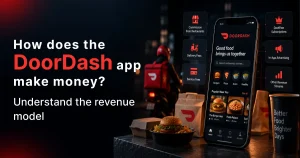
Monetizing a food delivery app is not just about building revenue; it’s about selecting the model that drives a stable business expansion. App monetization is a method by which app owners can grow their revenue by partnering with third-party businesses. Below are some of the frequently applied monetization methods or strategies for food delivery apps.
Subscription plans
A subscription model is an excellent way to generate steady revenue and understand the value of users. People who order frequently from your platform might be looking for lower delivery fees, early deliveries, and exclusive discounts.
By offering different subscription plans, users can access regular services at a much lower cost than they usually pay.
Delivery fees
Those who are not your regular users and have not taken any subscription will have to pay the restaurant delivery charges. The delivery fees are calculated according to order size, distance from the food business, or peak hours. The delivery fee can be waived for a specific billing amount or for first-time app users.
Promotions & features listing
This option is for food delivery partners or restaurants that want to be featured on the top list of your app. They can display their banner as a promotion or purchase a subscription to be featured among the top 5 or 10 restaurants. This is a mutually beneficial situation for app owners and sellers.
Advertisement
Ads are another effective way to generate steady revenue. Allow other businesses to place their advertisements in specific areas of your app that don’t bother users and can easily catch their attention.
Collaboration with brands
One of the most popular and steady ways to monetize your food delivery app is to partner with similar brands, like beverage sellers, grocery stores, and so on. You can create extra income with this cross-selling, putting your commission on each product.
Restaurant commission
The app earns every time a restaurant earns. This amount is a fixed or variable commission based on multiple factors, like whether the restaurant is running an offer or giving add-on discounts. But the main scenario is that sellers only pay for the actual sale.
Build A Food Delivery App with GMTA Software
Today, the food delivery business is more inclusive with its digital availability and faster market adaptations. The primary goal of food delivery businesses has become to fulfill user requirements with utmost satisfaction.
From early deliveries to offering fresh and hot food, many restaurants and food sellers are competing with each other on digital platforms. The one, which is meeting these benchmarks are ahead of the crowd and have possibilities to grow in parallel.
At GMTA Software, we help founders to fast-launch and scale through our on-demand food delivery app development approach. We have hands-on experience in building scalable food delivery clone apps, be it Pizza Hut clone app development or a clone app like DoorDash.
As an established AI food delivery app development company, we nurture business growth from implementing different monetization techniques to analytics-driven success.
We build food delivery app solutions that are user-centric and support business goals simultaneously. Other than creating an aggregator platform, GMTA Software also builds custom food delivery apps to fill the market gaps with an intuitive vision.
Partner with GMTA Software for food delivery app development that addresses the real user pain points and scales when it requires expansion.

FAQs
How long does it take to develop a food delivery app?
Food delivery app development time is generally between 3 to 10 months. This time cycle may shrink or expand according to multiple affecting factors, such as:
- App type
- Complexity level
- Development company location
- UX/UI level
- Tech stacks and technologies, etc.
How much does it cost to develop a food delivery app?
The cost to develop a food delivery app is not fixed, as it depends on various elements such as platform choices, design complexity, and technological advancement.
What key features are required for a food delivery app development?
Some of the most essential features of a food delivery app are:-
- Advanced AI searches
- Route optimization
- Quick order updates
- Ease of payments
- AI analytics & predictive analytics
- Interactive dashboards
Which is the best food delivery app business model for startups?
The aggregator model is one of the most accessible food delivery platforms that can be a great kickstart for entry-level businesses. Yet, the best food app model is truly what suits your budget, business goal and target market.
What is the role of AI in food delivery app development?
AI is transforming the food delivery industry by providing advantages such as AI recommendations, searches, predictive analytics, and optimized delivery logistics.
How can I monetize my food delivery app?
A food delivery app can be monetized in several ways that can boost the business revenue in a strategic way. Below are the key monetization methods:-
- White-label solutions
- Subscription model
- Ads and promotions
- Commission fees
- Service fees
- Data monetization
- Delivery fee

Uday Singh Shekhawat has 9+ years of experience covering software architecture, AI/ML development, and technology strategy at GMTA Software. He writes for founders and CTOs evaluating build complexity, technology investment, and vendor decisions — including in regulated industries such as healthcare, where his background in HIPAA-compliant and FHIR-integrated systems informs his perspective on compliance-driven cost factors.