

Key Takeaways:
- A logistics app costs $40K to $250K+ in 2026, but the type matters more than the range — a last-mile delivery app can start at $40K, while a multi-tenant 3PL freight platform with EDI and telematics integrations can exceed $350K.
- Third-party integrations are usually the largest single cost driver, not visible features. Every TMS, WMS, ERP, ELD, or carrier connection adds $5K–$30K on its own, and a platform juggling five of these will out-cost a feature-rich single-tenant app.
- Start with the operational pain point, not the tech stack. Fleet management, warehouse management, last-mile delivery, freight management, and on-demand delivery platforms solve fundamentally different problems—building the wrong type wastes budget regardless of execution quality.
- AI is a cost multiplier, not a starting feature. A basic shipment-summary assistant adds $10K–$25K; predictive ETA or carrier intelligence can add $25K–$80K+. Sequence it after core workflows are validated, not into the MVP.
- Compliance and security costs scale with who uses the platform, not just what it does. A single-tenant carrier app needs basic RBAC; a multi-tenant 3PL platform serving 200 shippers needs tenant isolation, SSO, and audit-ready records that can add $50K–$100K+ on their own.
Whether it’s a basic delivery management portal, a fleet platform, or an enterprise logistics system, building this product for your US business can cost you somewhere between $40K and $250K+. However, the pressing issue most CTOs, founders, and startups are worried about is the cost of continuing to operate with fragmented systems. A 3PL managing loads through spreadsheets, phone calls, legacy TMS software, and disconnected GPS systems loses hours just coordinating information that should otherwise be available in real time. Customers expect Amazon-style shipment visibility, accurate ETAs, instant updates or alerts, digital proof of delivery, and hyper-fast issue resolution.
The US business logistics costs reached $2.4 trillion, which is equivalent to 7.8% of the country’s GDP in 2026. It means that the market has become more competitive than ever. That’s why understanding the logistics app development cost in 2026 upfront is critical. Otherwise, you would end up with a wrong estimate, which will automatically translate into underfunded projects, expensive scope changes, or an app that can’t support your growing business’s operational needs. So, here’s a detailed breakdown of the major cost drivers, explaining how the numbers can vary by logistics business model and development approach. Whether you are a 3PL, enterprise logistics company, freight operator, or a startup, you can now estimate a realistic budget with this guide.
What Is a Logistics App, and What Types Exist?
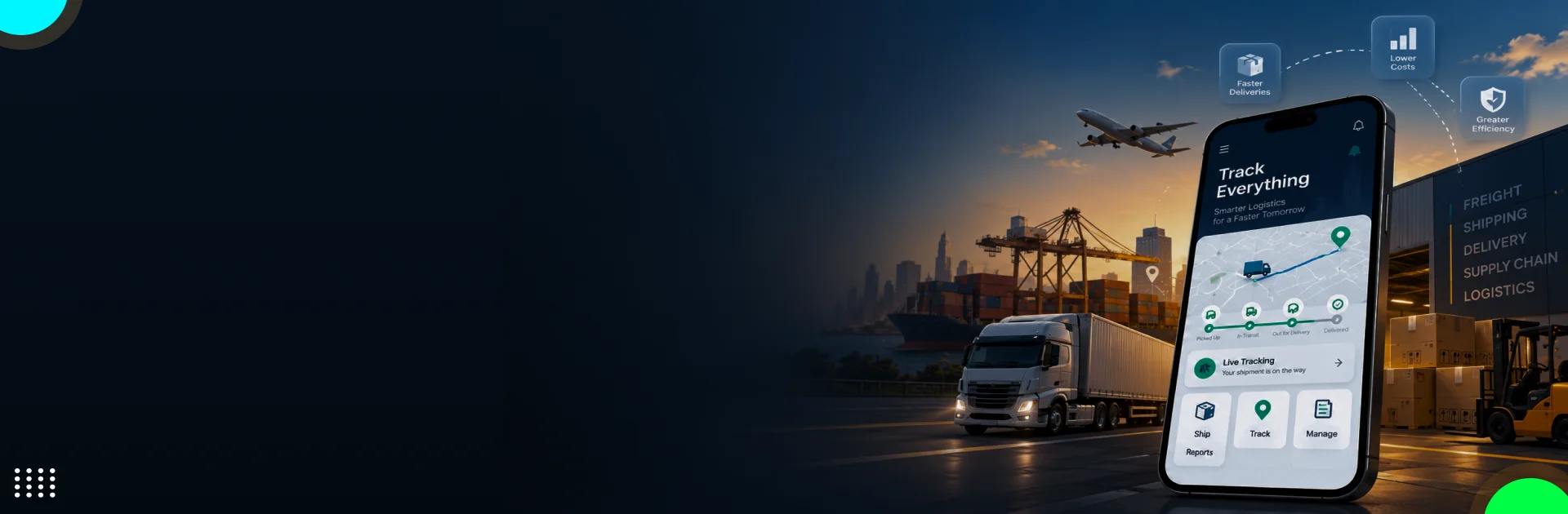
A logistics app is a digitized solution that helps businesses replace fragmented processes, like phone calls, spreadsheets, manual dispatching, and disconnected tracking tools with a centralized system. In addition, it combines advanced technologies, such as:
- GPS for real-time location tracking
- Mapping APIs for route optimization
- Cloud computing for scalable infrastructure support
- Telematics for collecting real-time vehicle and driver data
- Automation for speeding up repetitive tasks
- Data analytics for higher demand forecasting accuracy
However, the right app type depends on the exact operational friction your business is facing. Let’s say you are losing revenue due to trucks sitting idle or being underutilized. In that case, it’s a fleet management system that can deliver maximum value. Similarly, if your teams cannot locate specific inventory SKUs across three different warehouse locations, all you need to focus on is the warehouse management system. So, knowing what logistics app type can help solve your business pain point is crucial because that forms one of the primary cost drivers.
This is the exact evaluation we walked through with Lordiga, a logistics platform we built with a focus on real-time shipment visibility and a responsive dispatch experience across iOS and Android — the app type you choose here determines almost every cost decision covered in the rest of this guide.
Categories of logistics apps for the US business
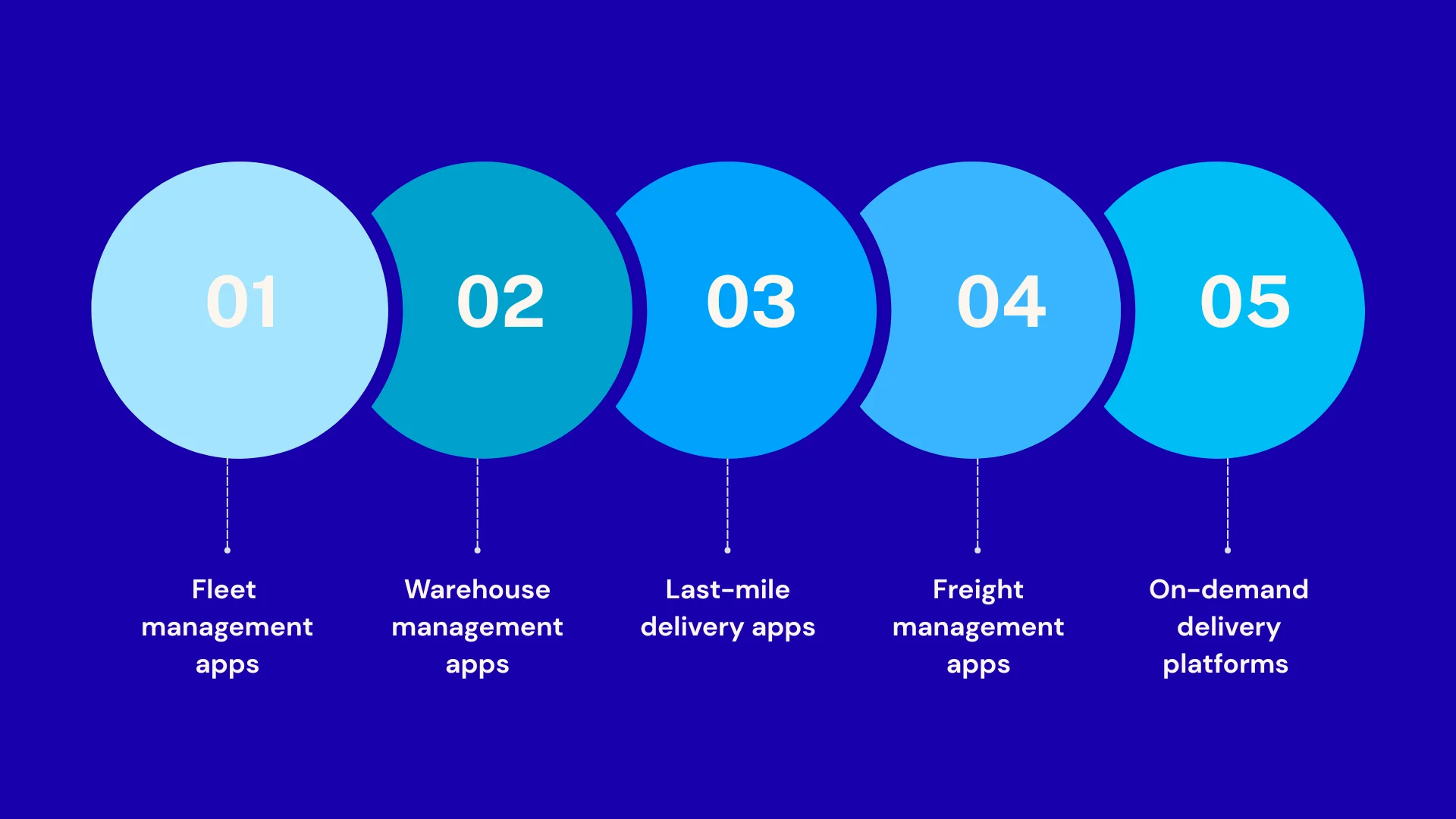
Fleet management apps
With this logistics platform, you can control the operation of your entire fleet from a centralized portal. You won’t have to call drivers to get updates on their location or switch between separate GPS and maintenance systems every half an hour. That’s because your dispatch team can see the fleet from a single platform, no matter how many vehicles you have or how vast your service coverage area is. The primary must-have details that get displayed are:
- The location of every vehicle, be it a cab or a truck
- The driver sitting behind the wheel
- The state of the vehicle, like whether it’s sitting idle or not
- The amount of fuel it’s consuming in real time
- The exact time for due maintenance
Takeaway: Build this app if your biggest business problem is fleet visibility, driver management, vehicle utilization, or transportation operating expenses
Warehouse management apps
A WMS allows you to control both inventory and warehouse operations, from storing the goods that arrive at the facility to fulfilling orders received into the central business system. Your employees won’t have to search for which shelf has a certain SKU product or count the number of units manually. Instead, they can retrieve all the necessary information from the WMS dashboard, including:
- Which item has to be picked for a specific order request
- Where it is located within a facility
- How much stock of the product remains within the facility
- Which order it belong to
Takeaway: Invest in this app if inventory inaccuracies, slow picking, poor warehouse visibility, and fulfilment inefficiency are causing friction points
Last-mile delivery apps
This becomes a relevant solution when your logistics business already has enough order volume in the system but is struggling to deliver them efficiently. With this app, you will be able to manage everything that happens between the local warehouse, store, or distribution hub and the customer’s doorstep. It can help automate several core business workflows, which otherwise consume too much manual effort and operational hours unnecessarily, including:
- Assigning deliveries to drivers
- Creating optimized routes to meet delivery ETAs
- Calculating accurate ETAs for every successful order dispatch
- Tracking drivers with real-time GPS data
- Notifying customers about each delivery milestone
- Capturing digital proof of delivery
Takeaway: Build a last-mile delivery app if your business is losing revenue through inefficient routes, missed delivery windows, excessive driver mileage, or poor customer visibility
Freight management apps
Whether you are a freight broker, manufacturer, 3PL, or transportation company, the FMS app will help you coordinate commercial cargo movements between shippers and carriers. You won’t have to rely on emails, calls, spreadsheets, or a separate carrier portal to keep your business operations running. Instead, the logistics app will help your teams to create loads, assign carriers, tender shipments, compare rates, manage documents, track freight, and confirm delivery.
Takeaway: If you are struggling with managing loads, shipment visibility, and transportation coordination at scale, start building the FMS now
On-demand delivery platforms
To connect delivery requests with available drivers in real time, the on-demand delivery platform becomes the most practical business model. It’s very different from owning a single software for your fleet only. That’s because these logistics apps can coordinate independent drivers or third-party delivery providers across the US.
Think of a portal where a customer requests a same-day delivery. You can use this app to:
- Identify nearby available drivers with respect to the delivery location
- Calculate the delivery price based on real-time parameters
- Offer the job to the active drivers within the geofenced area
- Track the trip, right from dispatch to final doorstep delivery
- Process the payments and confirm the delivery within the portal and to the customer
Takeaway: Build this logistics product if your business model depends on dynamically matching customers and delivery providers rather than simply managing a fixed fleet size
Not sure which logistics app fits your business?
Fleet management, WMS, last-mile, freight management, or on-demand delivery — the right starting point changes your entire budget.
How Much Does Each Type of Logistics App Cost?
The type of logistics app you choose becomes one of the largest and never-to-be-overlooked determinants of where exactly your investment will flow.
- Take the example of a fleet management app. It spends more on continuous vehicle data, GPS, and telematics.
- A WMS portal requires high upfront investment for inventory-specific logic implementation, barcode/RFID workflows, and multi-location facility integrations.
- A last-mile delivery app will need capabilities like routing, driver dispatch, and live ETAs.
- An FMS requires load management, EDI/API connections, and a freight documentation repository.
- An on-demand delivery platform adds another layer for real-time driver availability, automated matching, and payment infrastructure.
Owing to these diverse requirements and feature scope, the development costs of a logistics app will vary greatly according to its type. So, the smartest approach is to identify which model will help you solve your business’s exact pain point so that you can begin estimation with the correct cost range.
| Logistics App Type | Estimated Cost in 2026 | What the App Typically Includes | Major Cost Drivers |
| Fleet Management App | $50,000–$250,000+ | Vehicle and driver profiles, GPS tracking, dispatch, trip history, fuel monitoring, maintenance scheduling, geofencing, driver performance, fleet analytics | Telematics and ELD integrations, real-time GPS data, vehicle diagnostics, predictive maintenance, advanced analytics |
| Warehouse Management App | $60,000–$300,000+ | Inventory tracking, barcode/RFID scanning, receiving, putaway, bin management, picking, packing, replenishment, stock transfers, multi-warehouse management | ERP/WMS integration, RFID, serialized inventory, complex warehouse workflows, automation and robotics integration |
| Last-Mile Delivery App | $40,000–$200,000+ | Order assignment, driver app, route planning, GPS tracking, ETA calculation, customer notifications, delivery status, electronic proof of delivery | Route optimization, multi-stop planning, dynamic reassignment, live tracking, mapping APIs, delivery time windows |
| Freight Management App | $75,000–$350,000+ | Load creation, carrier management, rate management, load tendering, shipment tracking, freight documents, delivery confirmation, invoicing | Carrier APIs, EDI, TMS/ERP integration, rate logic, automated load matching, freight payment, multi-tenant architecture |
| On-Demand Delivery Platform | $60,000–$400,000+ | Customer ordering, driver onboarding, real-time driver availability, automated matching, dispatch, GPS tracking, payments, ratings, notifications | Real-time matching, dynamic pricing, high-volume location tracking, payment infrastructure, geofencing, scalable backend |
Should You Build Custom or Use Off-the-Shelf Software?
For your US logistics business, the decision of custom vs. off-the-shelf product will ultimately come down to the economics and the complexity of the core operations.
Custom builds become more compelling when the app needs to accommodate proprietary rules, multiple customer-specific workflows, legacy integrations, high transaction volumes, or automation affecting your revenue margins directly. Let’s consider that you are a 3PL managing hundreds of shipper accounts across the US.
One customer may use a completely different rate structure; another may ask for a particular EDI workflow, while someone else could demand customized SLA reporting and billing. Here, if you go with a generic solution, you won’t be able to cater to these varying customer expectations. Thus, a custom 3PL freight management tool will become a practical investment, allowing you to tailor the workflows or capabilities around your business only.
Off-the-shelf builds make sense when you can profitably run your business using standardized workflows for fleet tracking, transportation management, warehouse operations, or delivery execution. Let’s assume you run a regional trucking company operating 50-100 vehicles.
For this, you will need driver management, GPS tracking, dispatch, maintenance records, and basic reporting features. If an established fleet platform already handles these requirements, you won’t have to build a proprietary system. Otherwise, you will end up spending development capital to recreate capabilities that aren’t unique to your logistics business.
| Factor | Custom Logistics Software | Off-the-Shelf Logistics Software | What Makes Sense for a Business |
| Upfront cost | Typically $25K–$400K+, depending on scope and integrations | Usually subscription-based, from hundreds to several thousand dollars per month | Buy if you need standard workflows; build if customization can produce measurable operational savings |
| Operational workflows | Can mirror your exact dispatch, fleet, warehouse, billing, or 3PL processes | You adapt your processes to the vendor’s existing workflows | Custom makes more sense when existing software forces costly workarounds |
| Integrations | Built specifically around your TMS, WMS, ERP, ELD, telematics, EDI, or internal systems | Depends on the integrations the vendor already supports | Custom is stronger when your technology ecosystem is unusual or integration-heavy |
| Scalability | Architecture can be designed around your expected fleet, shipment volume, tenants, and expansion plans. | Scalability depends on the vendor’s infrastructure and plan limitations | Custom is preferable when rapid growth or complex multi-tenant operations are expected |
| Long-term cost | Higher initial investment but no per-user software dependency; ongoing maintenance remains your responsibility. | Lower initial investment but recurring subscriptions, modules, users, and integrations can increase costs. | Compare 3–5 year total cost of ownership, not just the initial price. |
| Time to deployment | Typically 3–12+ months, depending on complexity | Can often be configured and deployed within weeks | Off-the-shelf works better when speed matters and your requirements closely match the product |
What Factors Affect Logistics App Development Cost?
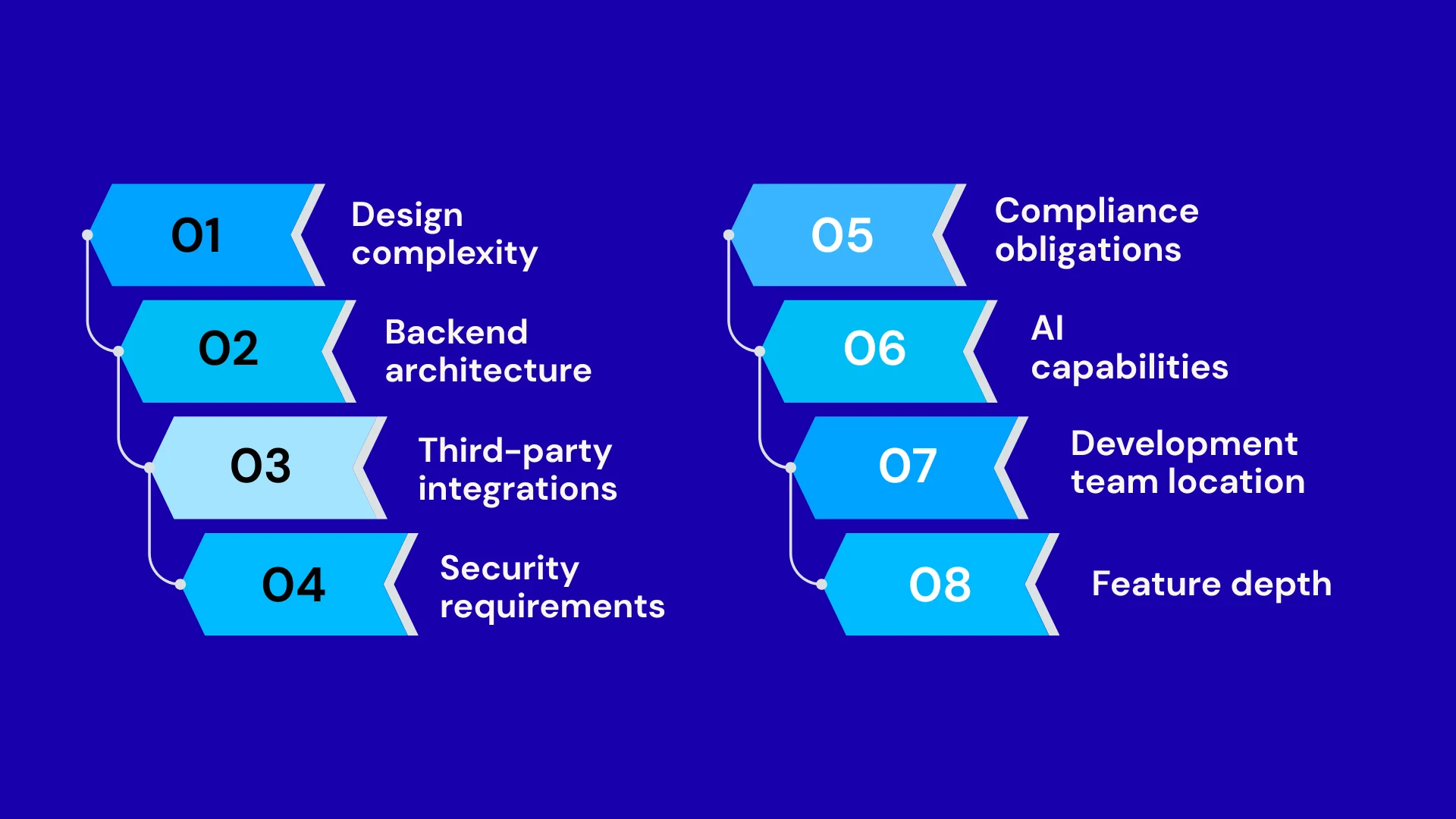
Design complexity
This affects the logistics software development cost because the application must reflect how transportation work is divided across your business in real time. The more operational roles and decision-making workflows you try to bring into one platform, the more interface logic, user permissions, states, exceptions, and testing will be required. That’s because a small carrier app doesn’t have the same design requirements as a 3PL, even when both the products are labelled as “logistics apps”.
Take the example of a local US delivery company. It will only need a driver application and a dispatcher dashboard at the beginning. A focused MVP of this kind would need an investment of just $25K-$50K, depending on the quality of the mobile experience and the backend.
However, when we talk about a 3PL or a freight operator, you will have to take in more complex design considerations. A dispatcher will have to work from a map-based control center, while a shipper will require a shipment visibility feature. So, once you include these role-specific workflows, the project will automatically move towards $60K-$100K, as there will be more user journeys to design, implement, and test.
| Business Requirement | What Increases Development Cost | Typical Cost Impact |
| Driver + dispatcher workflows | Separate mobile and web journeys, permissions, status flows | +$10K–$20K |
| 3PL multi-role platform | Shipper, broker, carrier, dispatcher, driver, finance interfaces | +$25K–$50K |
| Live dispatch control tower | Interactive maps, load boards, vehicle status, exception handling | +$15K–$35K |
| Customer/carrier portals | Shipment visibility, tendering, documents, messaging and reporting | +$15K–$30K |
| Offline logistics workflows | Offline POD, local data storage, synchronization and conflict handling | +$10K–$25K |
Backend architecture
The way you plan to build the backend layer of your logistics app will directly influence its capacity to keep the core operations running reliably as shipment and vehicle activity scale. That’s because these apps do not always deal with static records. Orders change status, drivers move, ETAs shift, loads get reassigned, customers request updates, and externally connected systems continue to transmit information. Thus, the architecture needs to keep all these dynamically changing events in perfect sync.
Let’s consider a regional carrier startup operating about 30 to 40 trucks in Chicago. So, the first logistics application it plans to build may only need to store driver assignments, delivery statuses, and periodic GPS locations. A backend of this scale is relatively simple, which keeps the MVP build cost in the $25K-$50K range.
Now take a US fleet operator with 200+ vehicles. Location information will continue to arrive throughout the day, while dispatchers will assign loads and drivers will update the progress on each delivery they are assigned. So, the logistics application will need a highly powerful backend framework that can:
- Determine which location belongs to which vehicle
- Update the correct shipment
- Recalculate the relevant ETAs
- Make the latest information available to both the dispatcher and the customer
Developing this level of integrated real-time coordination pipeline will push the backend costs to the bracket of $50K-$100K+. At an enterprise scale, however, you may need to invest $75K-$150K+ additionally for event-driven processing logic, geospatial data handling pipelines, background workers, and cloud infrastructure.
| Business Requirement | What Increases Development Cost | Typical Cost Impact |
| Small fleet operation | Basic shipment, driver, and delivery-status database | +$15K–$25K |
| Real-time fleet tracking | Continuous GPS events, geospatial processing, and live updates | +$20K–$40K |
| High-volume shipment processing | Queues, background processing, caching and scalable infrastructure | +$30K–$60K |
| Multi-tenant 3PL platform | Tenant isolation, account-level data access and complex permissions | +$20K–$40K |
| Enterprise-scale availability | Auto-scaling, monitoring, failover, and high-availability architecture | +$30K–$70K+ |
Third-party integrations
Whether you want to build an FMS or a last-mile delivery app, third-party integrations become the largest cost driver. That’s because any logistics platform needs to fit into an existing technology ecosystem rather than replacing it overnight. From carriers to brokers, 3PLs, and freight operators, every US business has years of operational data and established systems behind its processes. Thus, the new application will have to exchange information with them accurately so that employees won’t have to enter the same shipment details into multiple portals manually.
If your small on-demand delivery startup needs just one mapping service, payment gateway, and accounting integration, you can keep the development costs within $10K-$25K. However, the dynamics change for a 3PL app, as it needs to:
- Exchange shipment and status information with a TMS
- Pull live inventory information from a WMS
- Send financial data to an ERP
- Receive tracking information from a carrier or telematics APIs
- Exchange structured shipment documents through EDI
Each of these connections will have its own authentication, data structure, error conditions, and synchronization needs. So, once you add these business-critical integrations to the core logistics app, the cost will automatically increase to $100K-$150K.
| Business Requirement | What Increases Development Cost | Typical Cost Impact |
| Mapping integration | Geocoding, routing, ETA, and address validation APIs | +$3K–$10K |
| TMS/WMS/ERP integration | Data synchronization, authentication, and field mapping | +$8K–$20K per system |
| Carrier integrations | Shipment status, tendering, tracking and document exchange | +$5K–$15K per carrier/API |
| EDI connectivity | Transaction mapping, validation, acknowledgements and error handling | +$10K–$30K |
| Telematics/ELD integrations | Real-time vehicle data, driver information and provider normalization | +$10K–$30K per integration |
On Lordiga, integration scope was the single largest driver of the build timeline—worth planning for early rather than treating it as a late-stage addition.
Security requirements
The moment your logistics app starts handling customer contracts, shipment data, driver information, freight rates, payment records, or vehicle information, you will have to factor in the additional security expenses in the initial build estimate. For a focused MVP that just needs secure authentication, RBAC, encrypted API communication, and protection for telematics data, you can keep the expenses within $5K-$15K.
However, it won’t suffice for a multi-tenant 3PL platform. Imagine 200 shippers using the same platform for coordination. Thus, the app will need to enforce tenant isolation logic so that a shipper can access only its own loads, rates, invoices, documents, and tracking information. Within a large-scale logistics organization, permissions will also differ by user roles. When you implement security guardrails specific to each of these, you add $15K-$30K+.
Large shippers and transportation businesses, on the other hand, will require far more complex security features within their logistics apps. Building the following capabilities can add $25K-$60K+ to a production-grade platform:
- SSO/SAML integration
- MFA
- Granular RBAC
- API authentication
- Encryption for data at rest and in transit
- Secrets management
- Vulnerability scanning
- Controlled administrative access
| Business Requirement | What Increases Development Cost | Typical Cost Impact |
| Basic application security | Authentication, encrypted APIs, and role-based access | +$5K–$15K |
| Multi-tenant security | Tenant isolation across databases, APIs, and interfaces | +$15K–$30K |
| Enterprise authentication | SSO, SAML/OIDC, MFA, and centralized access controls | +$10K–$25K |
| Sensitive logistics data protection | Encryption, audit trails, secrets management and data controls | +$10K–$25K |
| Enterprise security validation | Penetration testing, vulnerability assessment and remediation | +$15K–$35K+ |
Compliance obligations
Compliance expenses depend on which transportation processes the delivery tracking app or the freight management portal is responsible for managing. That’s because the regulations applicable differ with different logistics business models, which is why there’s no generic cost tier you can rely on. FMSCA mandates that every applicable carrier should use compliant ELDs and must follow requirements governing the creation, handling, and retention protocols of digitized records.
Now, let’s consider your app needs to pull a driver’s current duty status only from one existing ELD provider. To accommodate this integration, you will have to spend $5K-$15K. However, when you deal with a fleet management platform supporting multiple ELD providers, HOS visibility, record synchronization, compliance dashboards, and audit-ready history, the build costs will automatically climb to the $20K-$50K+ bracket.
| Business Requirement | What Increases Development Cost | Typical Cost Impact |
| ELD connectivity | Driver duty status, HOS information, and ELD data synchronization | +$10K–$25K |
| Compliance record retention | Structured storage, retention policies, and controlled retrieval | +$5K–$15K |
| Audit-ready workflows | Immutable activity history, timestamps and user-level audit trails | +$8K–$20K |
| Digital transportation records | Electronic documents, POD history and document associations | +$5K–$15K |
| Enterprise compliance requirements | Security controls, access reviews, reporting and customer-specific controls | +$20K–$50K+ |
AI capabilities
In a US logistics business, AI becomes valuable only when it can reduce empty miles, improve asset utilization, identify shipment exceptions earlier, improve carrier selection, and reduce the amount of manual workload. That’s why the logistics software development cost for every AI feature will vary.
For example, when the AI layer just has to retrieve and summarize existing information from the TMS and tracking database, the build expenses will be relatively lower, approximately $10K-$25K. But the moment you plan for predictive ETA, the investment required will climb to $25K-$60K+, covering the necessary data pipelines, model, evaluation framework, interface process, and dispatcher-facing workflow.
That’s because your logistics app will have to combine historical lane performance with current vehicle location, previous stop duration, traffic conditions, appointment windows, and carrier performance to estimate whether a shipment will arrive late or not. Now consider a freight broker wanting AI to recommend carriers based on rate, historical acceptance, on-time performance, equipment availability, and lane experience. Since it’s more complicated than just integrating an LLM within the logistics app, the cost will rise to $40K-$80K+.
| Business Requirement | What Increases Development Cost | Typical Cost Impact |
| AI logistics assistant | Shipment search, operational queries, and automated summaries | +$10K–$25K |
| Document intelligence | Extracting data from BOLs, invoices, PODs, and freight documents | +$15K–$35K |
| Predictive ETA | Historical shipment data, traffic and carrier-performance modeling | +$25K–$60K |
| Carrier intelligence | Carrier scoring, acceptance prediction and performance analysis | +$40K–$80K |
| AI-driven optimization | Load assignment, demand forecasting and exception prioritization | +$75K–$150K+ |
Development team location
Your development team’s location will affect the logistics app cost through regional engineering rates, availability of specialized expertise, and the amount of product and domain knowledge you need. A US-based development agency usually commands higher rates. Charging roughly $100-$200+ per hour will put a medium-complexity logistics app in the $100K-$250K+ range. The advantage lies in closer alignment with US business processes, easier communication with dispatch and operating teams, and less time spent translating the requirements specific to the domestic industry.
The offshore app development cost, however, is substantially less. Depending on the country and specialization, rates may fall around $25-$60 per hour. This makes a comparable development scope potentially cheaper by 30-60%. A focused logistics MVP that costs $50K-$80K with a US team can be developed for $25K-$50K offshore.
| Development Model | Typical Rate | Potential Project Range |
| Offshore team | ~$25–$60/hour | ~$25K–$60K for focused MVP |
| Nearshore team | ~$40–$90/hour | ~$40K–$90K for a focused MVP |
| U.S. development team | ~$100–$200+/hour | ~$75K–$150K+ for comparable scope |
| U.S. logistics-specialist team | ~$125–$225+/hour | ~$100K–$250K+ |
| Hybrid U.S. + offshore model | Blended rates | Often 20–40% below fully U.S.-based delivery |
Feature depth
It has one of the strongest effects on the logistics app development expense in 2026. That’s because a feature that merely records an activity will be cheaper to build than one that actively makes or automates an operational decision. Consider a small last-mile operator. Its MVP will need route planning that’s meant to take a list of delivery addresses and produce an efficient sequence of stops. Given the feature’s technical simplicity, you can implement it through a mapping and routing service, thereby keeping the costs within $5K-$15K.
Now assume a US delivery operation handling several hundred stops per day. Thus, its routing engine will have to consider factors like:
- Vehicle capacity
- Delivery windows
- Driver availability
- Stop duration
- Traffic conditions
- Priority orders
If a vehicle suddenly breaks down or a high-priority shipment request arrives, the system will have to recalculate the remaining routes and redistribute stops. This level of dynamic optimization can add $25K-$60K+.
| Feature | Basic Implementation | Advanced Implementation |
| Route optimization | Address-based route generation | Dynamic multi-stop optimization with capacity, traffic, and delivery windows |
| Fleet tracking | Vehicle location on a map | GPS + telematics + geofencing + alerts + historical analytics |
| Dispatch | Manual driver/load assignment | Automated assignment using capacity, availability, and operational constraints |
| Proof of delivery | Photo and signature capture | Offline POD, GPS/timestamp verification, documents and billing triggers |
| Inventory | Basic stock quantities | Multi-warehouse, bin, lot/serial tracking and real-time synchronization |
MVP vs Full-Scale Logistics App: What’s the Cost Difference?
In 2026, building an MVP-based logistics app will cost you around $25K-$60K, while for a full-scale platform, it will be $100K-$250K+. That’s because when you start with an MVP, you just have to invest in building critical workflows within the digital platform without spending heavily on functionalities that are yet to be validated.
However, when the software becomes a part of your logistics business’s core operating infrastructure, you will have to redesign the backend, permissions, integrations, dispatch logic, and data architecture. This automatically pushes the cost of a full-scale logistics app high.
| Area | Logistics MVP — $25K–$60K | Full-Scale Logistics App — $100K–$250K+ |
| Core operation | One focused workflow such as delivery management, fleet tracking, or shipment booking | Multiple connected workflows across dispatch, transportation, customers, carriers, warehouse, and billing |
| Users | Usually 2–3 roles, such as driver, dispatcher, and admin | Multiple role-specific experiences for drivers, dispatchers, shippers, carriers, warehouse teams, finance, and customers |
| Tracking & routing | Basic GPS tracking, map integration, and standard route generation | Real-time fleet visibility, dynamic routing, ETA prediction, geofencing, route exceptions, and operational alerts |
| Integrations | One or two critical APIs, such as maps, payments, or a basic TMS/WMS connection | Multiple TMS/WMS/ERP systems, EDI, carrier APIs, ELD/telematics, accounting, and enterprise data exchanges |
| Automation & intelligence | Manual dispatch, basic notifications, and straightforward status updates | Automated dispatch, predictive ETA, carrier intelligence, exception management, AI, analytics, and optimization |
How Does Logistics App Cost Vary by Region (US, UK, UAE, Singapore)?
The cost of developing a logistics app in 2026 varies by region because developer rates, logistics-domain expertise, project management costs, and local technology ecosystems differ across markets. For example, a US-based fleet management app will require ELD and telematics integration, while a UAE logistics platform will need bilingual interfaces and workflows suited to Dubai’s freight environment.
Similarly, a Singapore-focused solution might prioritize port, freight-forwarding, and regional supply integrations. These differences affect both the development effort and the expertise required. Choosing a lower-cost development region can help you reduce engineering expenses. However, the savings will be worthwhile only if the team can handle the application’s transportation workflows, integrations, security, and scalability needs.
| Region | Typical Development Rate | Logistics App Development Cost | Best Suited For |
| US | $100–$200+/hour | $75K–$400K+ | U.S. trucking, 3PL, TMS, fleet management, ELD/telematics |
| UK | $70–$150+/hour | $60K–$350K+ | UK freight, fleet, warehousing, European logistics |
| UAE | $40–$100+/hour | $40K–$300K+ | Dubai logistics, last-mile delivery, freight, GCC operations |
| Singapore | $50–$120+/hour | $50K–$350K+ | Port logistics, freight forwarding, warehousing, APAC supply chains |
| Japan | $45–$90+/hour | $50K–$300K+ | E-commerce logistics, warehouse automation integration (WMS/AS-RS), labor-shortage-driven fleet and dispatch automation |
Get your logistics app estimated against your actual requirements.
The ranges above are starting points — your real cost depends on your integrations, compliance needs, and scale. Share your requirements and GMTA will send back a detailed cost breakdown within 48 hours.
What Hidden Costs Should You Budget For?
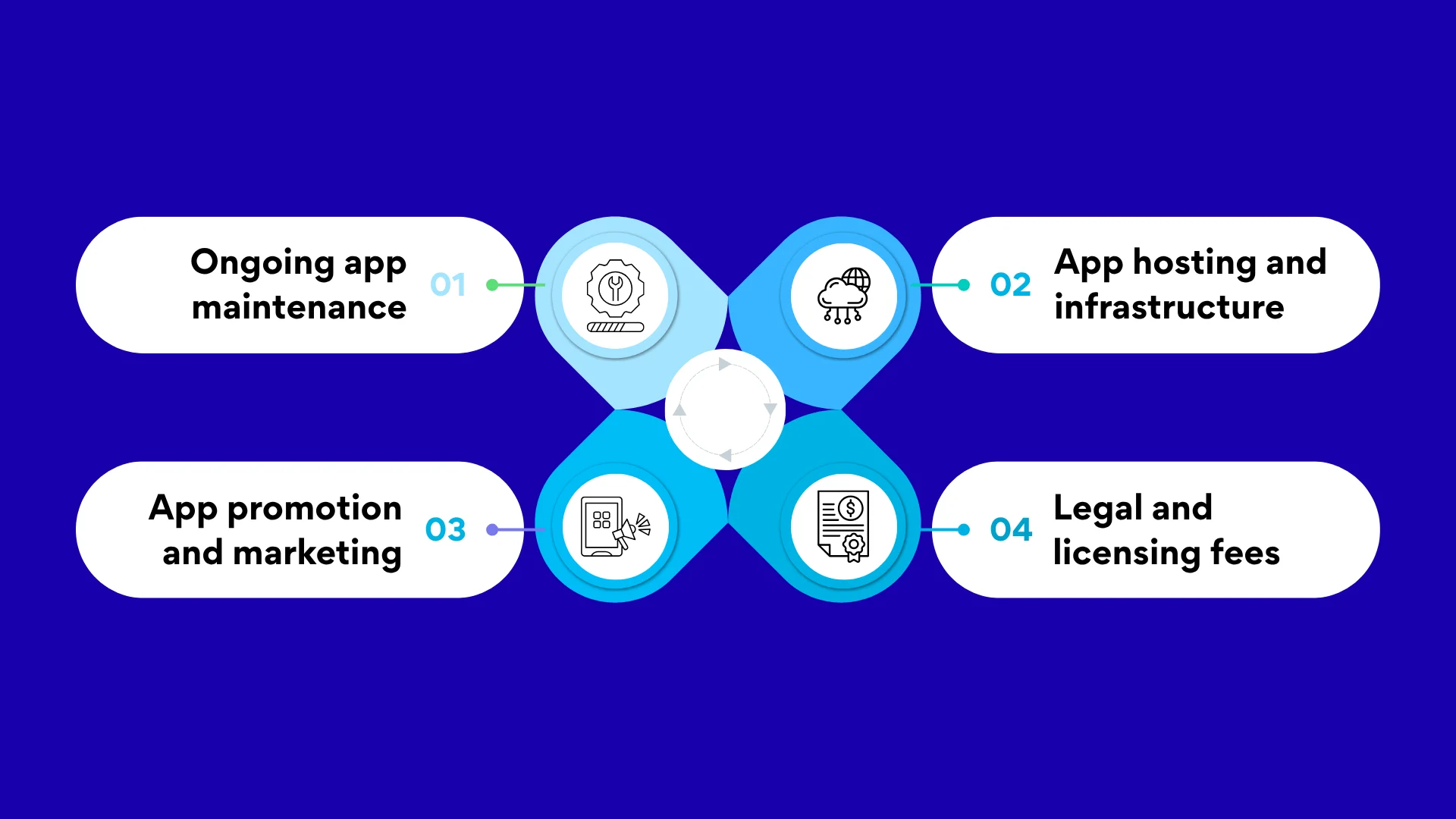
Ongoing app maintenance
Logistics app maintenance costs $5K-$15K annually for a smaller application and $15K-$60K+ for a mature platform. The budget will cover more than just fixing bugs found in production. It will help you deploy updates for your logistics app when:
- Android or iOS changes background location rules
- A mapping provider changes its API
- An ELD/telematics provider modifies its data format
In addition to rolling out phased updates, maintenance also includes improving slow dispatch screens, fixing GPS synchronization issues, updating security requirements, and adapting the app to new driver or dispatch workflows. As a rule of thumb, you should allocate 15-25% of the initial development cost for annual maintenance.
App hosting and infrastructure
For an MVP, the hosting and infrastructure costs per month range between $200 and $1K, while for a high-volume logistics platform, it increases to $5K-$20K+. That’s because a small carrier app will only need application servers, a managed database, object storage, backups, and basic monitoring.
Costs rise when hundreds or thousands of vehicles continuously send GPS or telematics events while dispatchers simultaneously monitor live maps or customers check shipment status. Real-time processing, auto-scaling, caching, queues, disaster recovery, and multiple environments are the major cost drivers you should factor in from the beginning.
App promotion and marketing
A logistics SaaS product requires $2K-$5K per month during early market entry and $5K-$20K+ when pursuing aggressive B2B growth. That’s because the marketing strategy for these apps is very different from that of a consumer delivery platform. A US TMS, fleet management, or 3PL platform will need transportation-focused SEO, LinkedIn advertising, outbound prospecting, product demos, and industry events. These will automatically increase your monthly expenses after the product is launched into the market.
Legal and licensing fees
Plan for roughly $2K-$5K in basic legal expenses and $5K-$20K+ for enterprise contracts, regulatory considerations, and multiple software licenses. If your logistics app connects to ELD/telematics providers, mapping platforms, payment services, or transportation-data providers, each will introduce a separate licensing or contractual expense.
| Hidden Cost | Typical Cost | What Drives the Cost in Logistics | What to Budget For |
| Ongoing app maintenance | $5K–$15K/year for small apps; $15K–$60K+/year for mature platforms | OS updates, security patches, GPS issues, TMS/ELD/telematics API changes, bug fixes, performance improvements | Keep a recurring maintenance contract rather than budgeting only for emergency fixes |
| App hosting & infrastructure | $200–$1K/month for MVPs; $5K–$20K+/month at high volume | Live GPS events, real-time dispatch, databases, API traffic, cloud compute, monitoring, backups, mapping and routing requests | Scale infrastructure with fleet size, shipment volume, tracking frequency, and uptime requirements |
| App promotion & marketing | $2K–$5K/month initially; $5K–$20K+/month for growth | B2B SEO, LinkedIn campaigns, outbound sales, demos, industry events, webinars, case studies, enterprise lead generation | Budget based on customer acquisition cost and contract value rather than app downloads |
| Legal & licensing fees | $2K–$5K basic; $5K–$20K+ for complex platforms | Customer contracts, privacy terms, data agreements, IP protection, ELD/telematics licenses, mapping APIs, transportation data, enterprise reviews | Include both one-time legal work and recurring third-party software/API licensing |
How Can You Reduce Logistics App Development Cost?
Build an MVP first
An MVP will help you reduce the logistics app development cost by 40-60% as it will limit the first release to workflows that can generate immediate business value. For example, for your carrier platform, you could begin with driver assignment, GPS tracking, delivery updates, and electronic POD at the beginning. Once you validate the user demand and operational ROI, add automated dispatch, customer portals, AI, and advanced analytics.
Prioritize essential features
Feature prioritization from the start can help you save $20K-$75K+ during the initial build. That’s because you can separate operational necessities from features that can wait for future rollouts. If we consider a 3PL platform, you should focus on the most essential and value-based features, like shipment tracking, load management, carrier communication, and POD. As for predictive analytics or AI-based carrier scoring, you can plan to build them later on.
Use cross-platform development
If you want to deliver the same driver experience across iOS and Android, it’s better to go with a cross-platform development approach. Since teams will have to work on a single codebase, engineering complexity can be minimized significantly. This will automatically help you save 20-35% of the initial development cost for your logistics app.
Outsource with domain expertise.
It’s better to outsource logistics app development to an offshore-based company so that you can benefit from their $25-$60 hourly rates. However, while doing so, make sure the agency you want to partner with has enough domain expertise and knowledge about the US logistics market. Otherwise, you may end up spending more on future retrofits due to misalignment of the app features, compliance guardrails, and customer experience.
Ready to scope your logistics app the right way?
GMTA has built real-time shipment visibility and dispatch platforms for logistics businesses that couldn’t afford to get the architecture wrong. Let’s talk through your specific fleet, integrations, and compliance needs — no generic proposal, just a plan built around your operation.
Why Work With GMTA for Logistics App Development?
Choosing a logistics app development partner depends on whether the team can handle the operational and technical complexity of the app, not just the interface. This is where GMTA Software comes in — our work on Lordiga, a logistics platform built for real-time shipment visibility and dispatch coordination, gave us direct experience with the exact cost drivers covered in this guide: integration scope, backend architecture for real-time data, and security requirements that scale with tenancy. Whether you need a standalone on-demand delivery app or a fleet management platform connected to multiple workflows, we scope the build around your actual operational bottleneck rather than a generic feature list.
What’s more, we go beyond basic tracking by incorporating AI, analytics, cloud infrastructure, and scalable backend architecture for every logistics application we work on. Thus, you can start with a focused MVP and progressively add automation as your fleet, shipment volume, and customer base grow..
FAQs
How much does it cost to build an app like Onfleet?
Building a logistics app like Onfleet will cost $50K-$150K for a focused MVP and $150K-$400K+ for an advanced, enterprise-grade solution. The difference depends on whether you need basic dispatch, driver management, GPS tracking, route optimization, and proof of delivery, or more sophisticated capabilities like real-time fleet visibility, dynamic routing, APIs, and multi-tenant architectures. Costs will also increase when you plan for integrations with mapping services, TMS/WMS systems, telematics providers, and other external apps.
How much does it cost to build an app like Uber Freight?
Building a freight-matching platform like Uber Freight costs $150K–$400K+ for a production-grade build, and $60K–$150K for a focused MVP covering load posting, carrier matching, and basic rate negotiation. The cost climbs with real-time capacity matching, dynamic pricing logic, carrier verification workflows, and the multi-tenant architecture needed to support shippers, carriers, and brokers on the same platform simultaneously.
How much does it cost to build a freight-forwarding platform like Flexport?
A Flexport-style platform costs significantly more than a standard freight-matching app — typically $250K–$600K+ for full scope — because it combines freight forwarding, customs documentation, multi-carrier and multi-modal visibility, and financial workflows like invoicing and duties into one system. A focused MVP covering shipment booking and basic visibility can start around $80K–$150K, with cost scaling from there based on how many carriers, customs regions, and document types the platform needs to support.
Is it cheaper to build or buy logistics software?
Buying off-the-shelf logistics software will be initially cheap. But building a custom app will become cost-effective when your logistics operation has requirements that a generic solution cannot handle efficiently. A subscription might cost hundreds or thousands of dollars per month, without you having to commit to full-scale development. However, customization, additional users, integrations, and premium modules can increase the investment over time. In case of the latter, you may have to invest $25K-$60K+ for an MVP, but you will gain more control over workflows, integrations, data, and future functionality.
Does AI make a logistics app more expensive?
Yes, AI will increase logistics app development costs by roughly $10K-$100K+, depending on what features you want to build. Adding an AI assistant that simply searches shipping information will be inexpensive compared to building predictive ETA, demand forecasting, automated load assignment, or intelligent exception management. AI also introduces expenses for model APIs or infrastructure, data preparation, evaluation, monitoring, and ongoing optimization.
How long does it take to build a logistics app?
A focused logistics MVP takes 3-5 months, while a full-scale platform takes 6-12+ months. A basic driver and dispatcher app with GPS tracking, job assignment, status updates, and proof of delivery won’t take too long to develop. However, the time will increase if your product needs real-time fleet tracking, dynamic routing, TMS/WMS/ERP integrations, EDI, ELD or telematics connectivity, and complex permission systems.

Founder
Anjali Upadhyay is the Founder of GMTA Software Solutions, a mobile and web application development company she built from the ground up in 2019. Under her leadership, GMTA has delivered 200+ production applications across healthcare, fintech, and on-demand services for clients in the US, UK, Singapore, and UAE. She also leads GMTA’s AI practice, which has shipped production AI systems — including HIPAA-compliant healthcare workflows, LLM-integrated logistics platforms, and fintech automation tools — for US-based enterprise clients. Her writing covers AI product strategy, build-vs-buy decisions for AI systems, and the operational realities of moving AI from proof-of-concept to production at scale.